
When we wrote this article back in 2021, it was a reasonable introduction to structured data. Four years later, parts of it are outdated and a couple of things are just wrong. So it's had a full rewrite. The tools have changed, Google's documentation has moved, and the way search engines consume structured data has evolved. We've kept what still holds up and updated the rest.
There are clues you can give search engines to help them understand what a page is about and who it's for. Not just the words on the page, but structured signals embedded in the code that help crawlers categorise content correctly. Those signals are called structured data, and knowing how to use them well is one of the quieter differences between a website that performs and one that doesn't.
What is structured data?
Structured data is code added to a web page (typically in the <head> or <body>) that describes the content to search engines in a standardised format. Instead of a crawler having to infer that a page is a recipe, a product listing or a business, structured data tells it directly.
Think of it as metadata for machines. The content on the page is for your visitors. The structured data is for Google, Bing and increasingly the AI systems that power tools like Google's AI Overviews.
Unstructured data like comments, emails, free-form text is harder for algorithms to process. Structured data removes the ambiguity.
What format does structured data use?
There are three formats. In practice, one of them is what almost everyone uses.
JSON-LD is the format Google recommends. It sits in a <script> tag in the page head or body, separate from the visible HTML. It's clean, easy to maintain and doesn't require you to touch the markup of your actual content. If you're implementing structured data on a Shopify or Webflow site, JSON-LD is what you want.
Microdata and RDFa are older formats that embed attributes directly into HTML elements. They still work, but they're harder to manage and Google's own documentation steers you towards JSON-LD.
All structured data uses vocabulary from schema.org, a collaborative project maintained by Google, Microsoft, Yahoo and Yandex that defines the standard types and properties. If you want to mark up a recipe, a product, a business or a blog post, schema.org is where you find the correct terminology.
What types of structured data are most useful?
It depends on what your site does, but here are the most commonly relevant types for the kinds of sites Webcetera builds and manages.
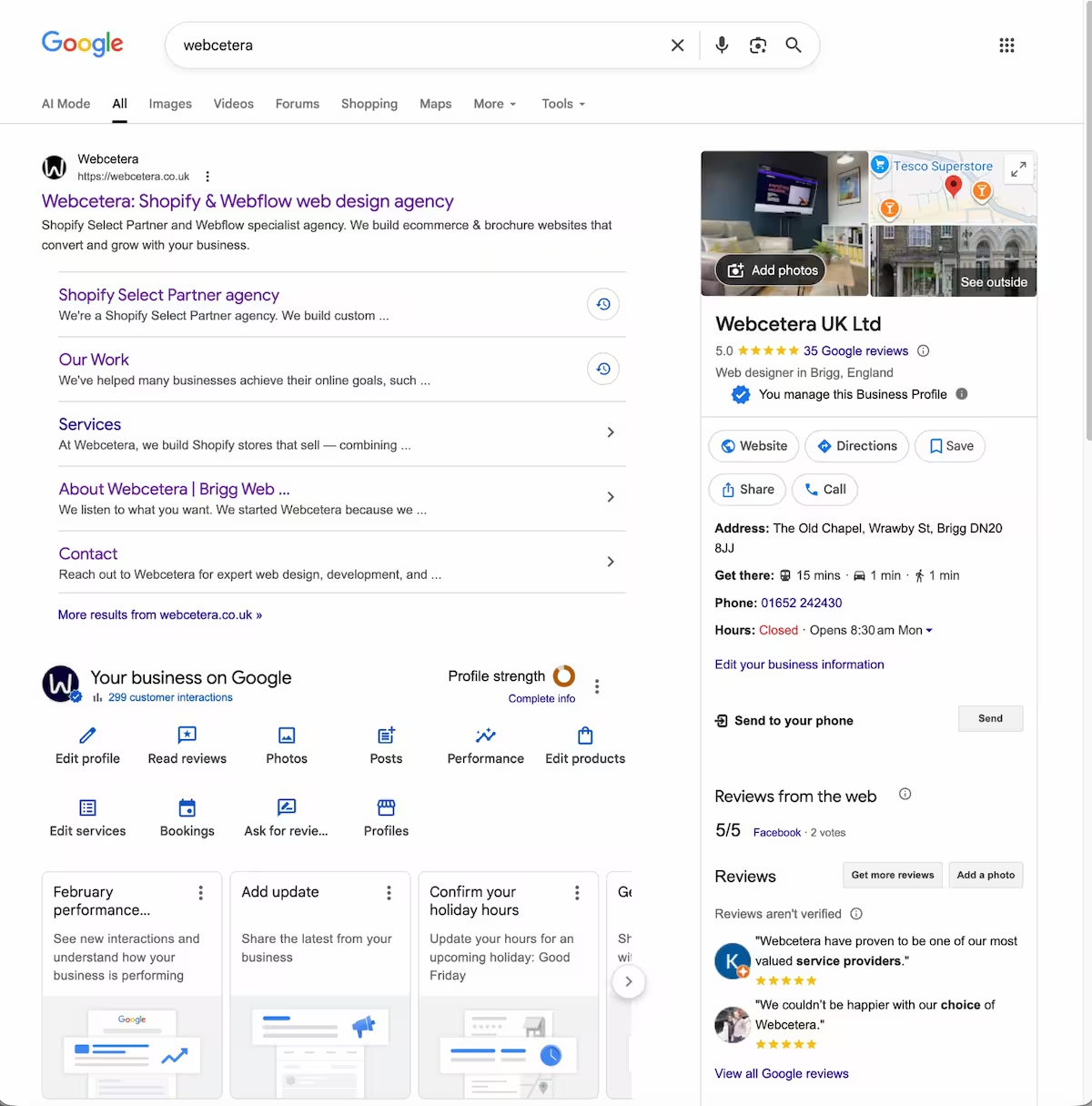
LocalBusiness / ProfessionalService: for service businesses, this tells Google your name, address, phone number, opening hours and what you do. It feeds the Knowledge Panel that appears on the right side of a branded search result. If you want your business information to appear accurately in Google's knowledge graph, this is how you give Google the source data.
Product: for ecommerce, product schema can unlock rich results showing price, availability and review ratings directly in the SERP. Shopify themes often include some product schema by default, but it's worth checking; incomplete or incorrectly formed markup can be worse than none at all.
BlogPosting / Article: marks up blog content with author, publication date, publisher and the article URL. Doesn't typically generate visible rich results, but it helps Google attribute content correctly and is good practice for any regularly updated blog. We use it on every post on this site.
BreadcrumbList: tells Google the page hierarchy. Breadcrumb trails can show in search results, which helps users understand where a page sits before they click.
FAQPage: we used to see this generating highly visible accordion-style rich results in the SERP; Google significantly reduced its visibility for FAQPage markup in 2023, limiting it to authoritative health and government sites for most queries. It still has value for helping Google understand your content structure, but don't implement it expecting the dramatic SERP real estate it once generated.
What about rich results and featured snippets?
SEOs used to describe featured snippets as the pinnacle of the SERP. That might have been accurate in 2021 and was at the heart of a lot of online discussions and videos. The picture is more nuanced now.
Google's AI Overviews now appear above featured snippets for a significant number of queries, particularly informational ones. Click-through rates from featured snippet positions have declined in some categories as a result. That doesn't make structured data less important; if anything it makes accuracy more important. AI Overviews pull from structured signals as well as page content. Feeding search systems accurate, well-formed data about your content is increasingly how you influence what gets surfaced, whether that's in a traditional result or an AI-generated summary.
Featured snippets themselves are still real and still valuable. They're generated from content rather than schema markup directly, but structured data helps search engines categorise pages correctly, which is a precondition for being considered for a snippet at all.
How do you validate structured data?
We used to point people to Google's Structured Data Testing Tool. That tool still exists, but Google's current recommended tool is the Rich Results Test.
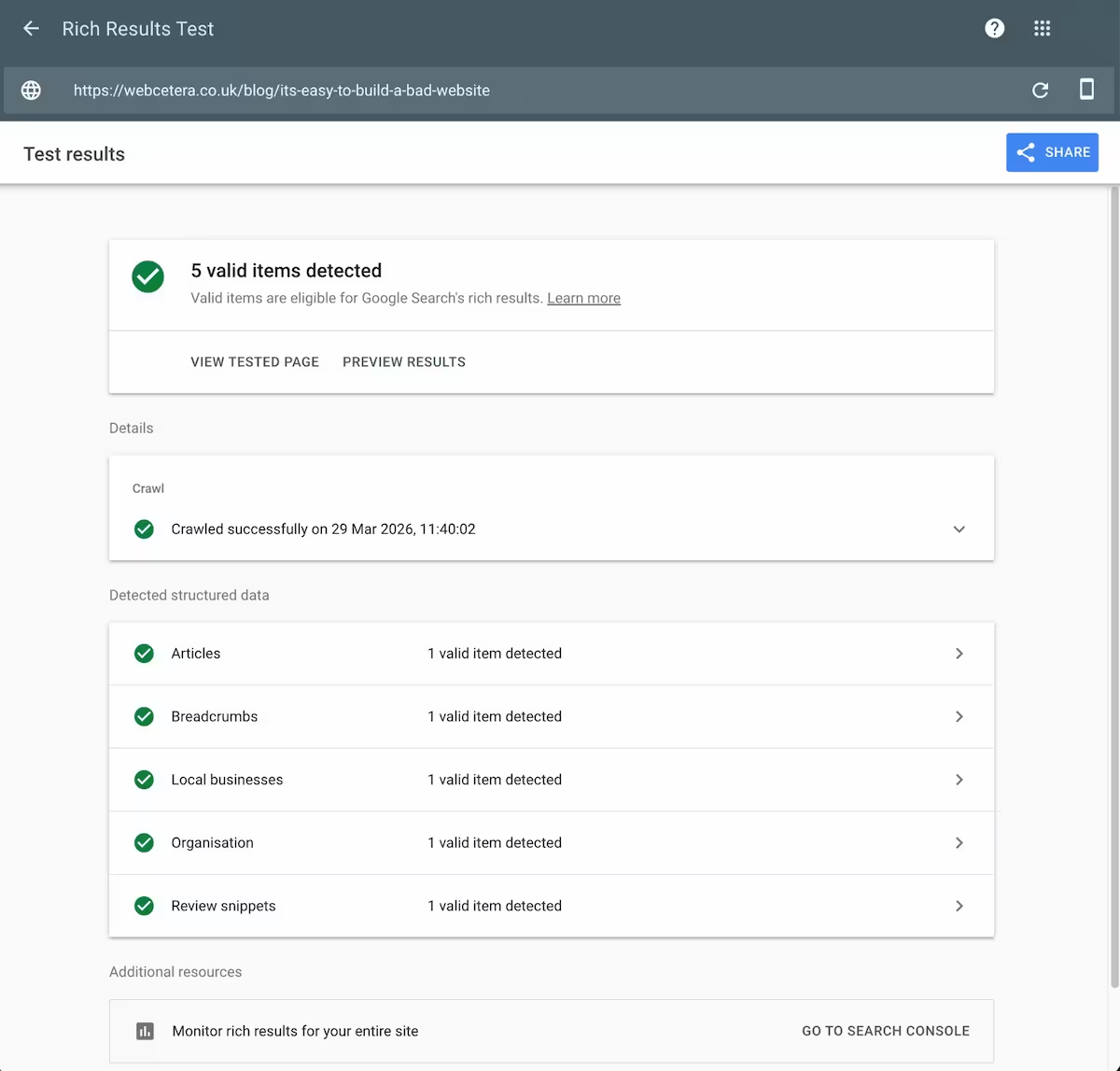
Use the Rich Results Test to check whether your structured data is valid and eligible to generate rich results. It shows errors and warnings clearly and tells you which result types your markup could qualify for. Take a look — visit the site and enter your website URL. Do you get a lot of green ticks, or do you get warnings or errors?
Google Search Console also has a rich results report under the 'Enhancements' section. Once your structured data is live and indexed, GSC will flag any issues it finds as it crawls and we'd highly recommend checking this periodically rather than just at launch.
For more detailed validation and to explore schema types, schema.org's validator is also useful.
Structured data on Shopify and Webflow
Both Shopify and Webflow handle structured data incredibly well out of the box, but neither are perfect. They provide you with the tools to enhance your structured data (which is specific to your own use-case) .
Shopify themes typically include product schema and sometimes organisation-level markup. Some themes add more options in settings, but others might need you to code specific schema in, for example we have programmatically added recipe schema for the PACK'D website. It's worth running a rich results test on your key pages to see what's there and whether it's complete. Check the BlogPosting schema for your stores blog posts. If your blog is part of your SEO strategy, it's worth checking this is working as expected.
Webflow: gives you more control. JSON-LD can be added via custom code embeds at page level or, more usefully, driven from CMS collection fields. This means you can maintain structured data for blog posts, products or team members from within the CMS without touching code on each individual page. That's how we manage it on this site.
WordPress: plugins like Yoast SEO and Rank Math handle a good portion of your schema automatically, or provide easy to follow settings. Both are continually improving their plugins including how they handle schema, especially on their premium paid tiers. They're a reasonable starting point, but still worth auditing rather than assuming everything is correct.
What does good structured data implementation actually look like?
A few practical principles worth keeping in mind:
Only mark up content that genuinely exists on the page. Google is clear that structured data describing content that isn't visible to users can be treated as spam. Don't use schema to claim properties you're not actually displaying.
Keep it accurate and up to date. Stale data, such as wrong phone numbers, discontinued products or changed opening hours, creates a mismatch between what you're telling Google and what a user finds.
Test before and after publishing. Particularly after a theme update or platform migration, structured data can break silently. It's worth including it in any QA process.
Structured data is one part of a broader picture. If you're wondering whether your website is working as hard as it should be, our article on what makes a good website covers the other pieces.